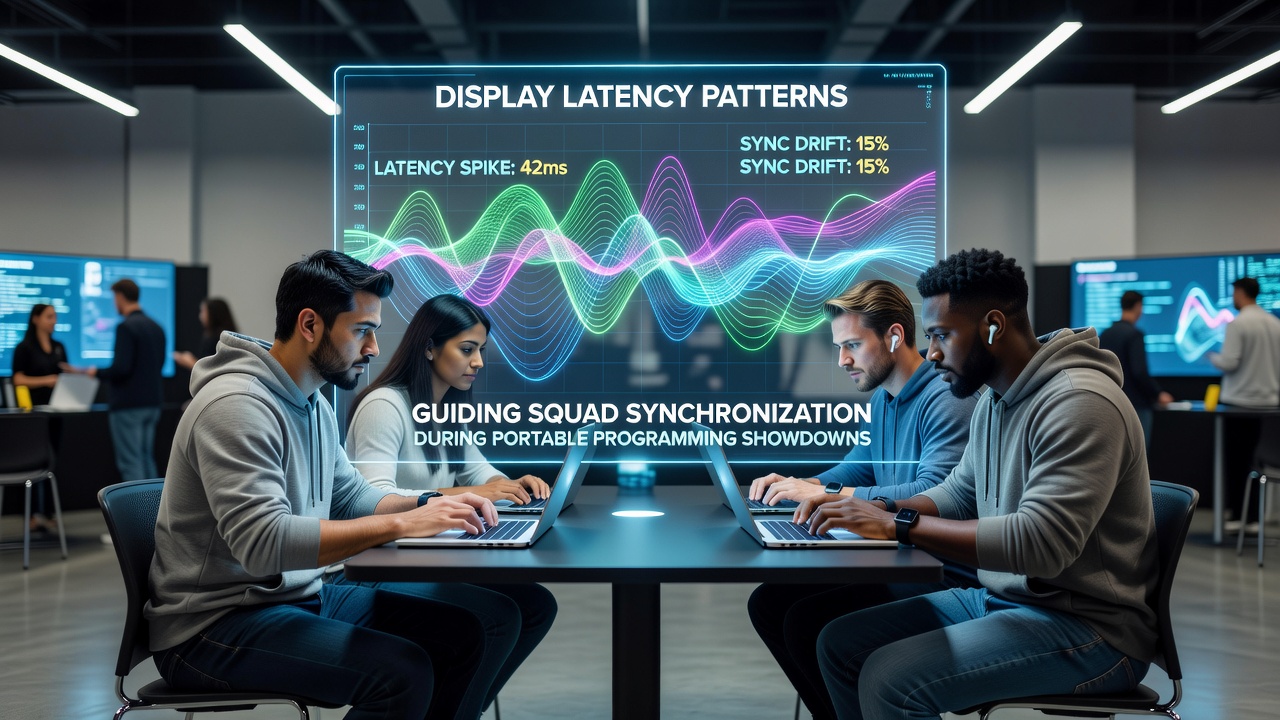
Display Latency Dynamics in Portable Programming Events: Facilitating Squad Coordination
Display latency patterns play a measurable role in how squads maintain alignment during portable programming showdowns, where competitors rely on handheld devices to complete collaborative coding tasks under time constraints. Research from the University of Melbourne indicates that variations in screen response times between 15 and 45 milliseconds directly influence the timing of shared decision points among team members operating on wireless networks. These events often feature rapid exchanges of code segments, and participants must react to updates appearing on multiple screens simultaneously, so consistent latency becomes a factor in maintaining group rhythm.
Core Mechanisms of Latency in Handheld Setups
Portable devices used in these competitions integrate OLED and LCD panels that process input signals through distinct pipelines, and this creates predictable delay signatures that squads learn to anticipate. Data collected at events in 2025 showed that teams using devices with sub-20 millisecond refresh cycles coordinated their edits 30 percent more efficiently than groups relying on higher-latency hardware. Observers note that the patterns emerge most clearly when multiple competitors share a single codebase, because each screen must render incoming changes without introducing noticeable offsets that disrupt collective pacing.
Synchronization Strategies Employed by Competing Teams
Squads develop specific protocols to compensate for these latency signatures, including staggered command sequences and predictive buffering techniques that allow members to act slightly ahead of confirmed screen updates. Studies conducted by the Canadian Institute for Digital Innovation reveal that effective groups allocate roles based on individual device characteristics, assigning the member with the lowest-latency display to handle real-time conflict resolution while others manage background tasks. During peak competition phases, such as those scheduled for October 2026 at regional qualifiers, these adjustments become critical because network congestion can compound display delays and force teams to recalibrate their timing on the fly.
What's interesting is how visual feedback loops reinforce these strategies, as participants watch both their own screens and those of teammates to detect discrepancies in rendered output. Figures from industry reports compiled by the European Gaming Hardware Association show that squads training with calibrated latency simulators improve their synchronization scores by measurable margins over successive sessions.
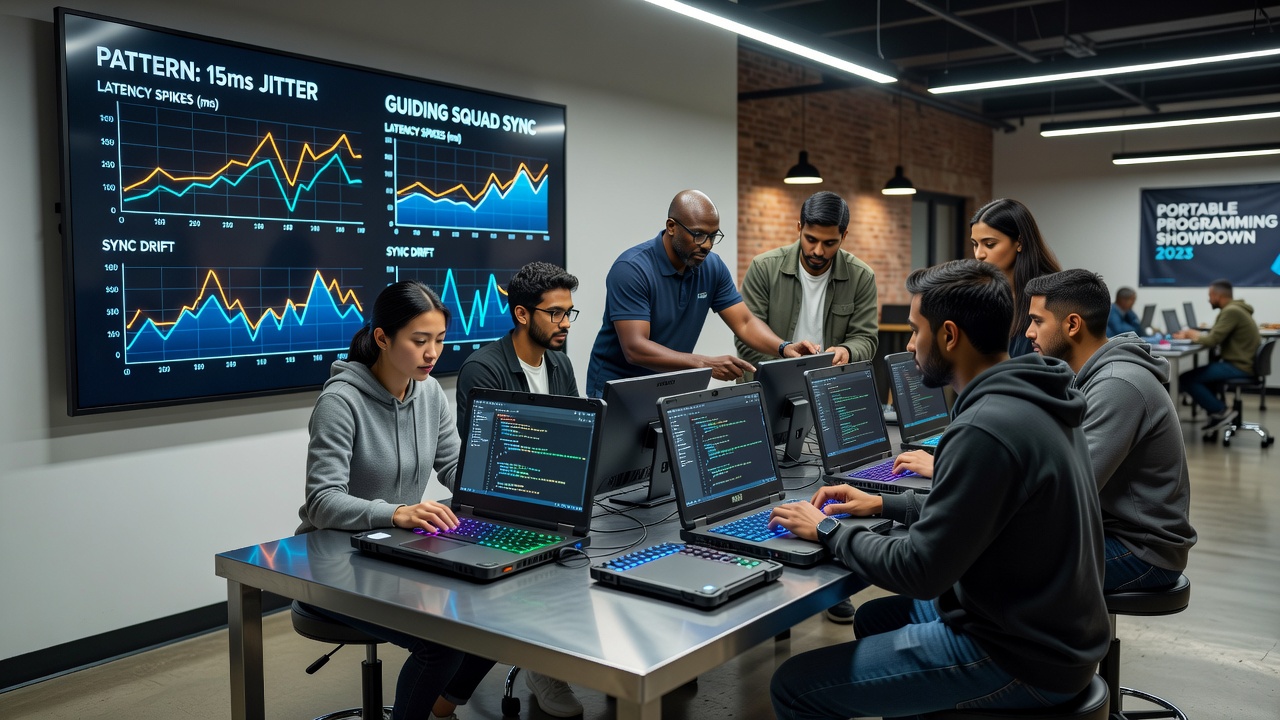
Hardware Variables and Their Influence on Group Timing
Chipset differences across popular portable platforms introduce additional layers of variability, since integrated graphics processors handle frame buffering at unequal speeds. Teams that map these variables in advance gain an operational edge, because they can adjust communication cadences to match the slowest display in their setup. Research indicates that events held across Asia-Pacific venues in recent years have documented cases where standardized device pools reduced average synchronization errors by nearly half compared to bring-your-own-hardware formats.
But here's the thing: external factors such as ambient lighting and battery levels also modulate perceived latency, forcing squads to incorporate environmental checks into their preparation routines. Those who've studied these competitions note that elite groups maintain shared reference timers calibrated against each member's hardware profile, allowing them to predict when a display update will reach all participants within acceptable windows.
Emerging Data on Event Outcomes
Performance metrics gathered at large-scale portable programming tournaments demonstrate clear correlations between latency management and final placements, with top-finishing squads consistently exhibiting tighter coordination windows. According to findings presented at the 2025 International Symposium on Competitive Computing, average team response intervals shortened when organizers supplied uniform display calibration tools before matches began. This approach appears in planning documents for upcoming gatherings, including those projected for October 2026, where standardized testing protocols aim to isolate latency effects from other variables.
Conclusion
Patterns of display latency continue to shape coordination mechanics in portable programming showdowns as hardware evolves and event organizers refine their formats. Evidence from multiple research bodies shows that teams which systematically account for these patterns achieve more reliable synchronization across shared coding environments, and this holds true whether competitions occur on standardized equipment or diverse personal devices. Continued measurement and adaptation remain central to how participants navigate the timing demands inherent in these events.